Traditional Venetian Mask Styles Explained
Venetian masquerade masks have evolved over centuries, each style reflecting a unique character from Italian history and Commedia dell’Arte tradition. Below we explore the most iconic Venetian mask styles and what makes each one distinct.
In Venetian Carnival there are 7 main types of masquerade masks: Colombina, Bauta, Volto, Moretta, Medico della Peste, Pantalone & Jester.
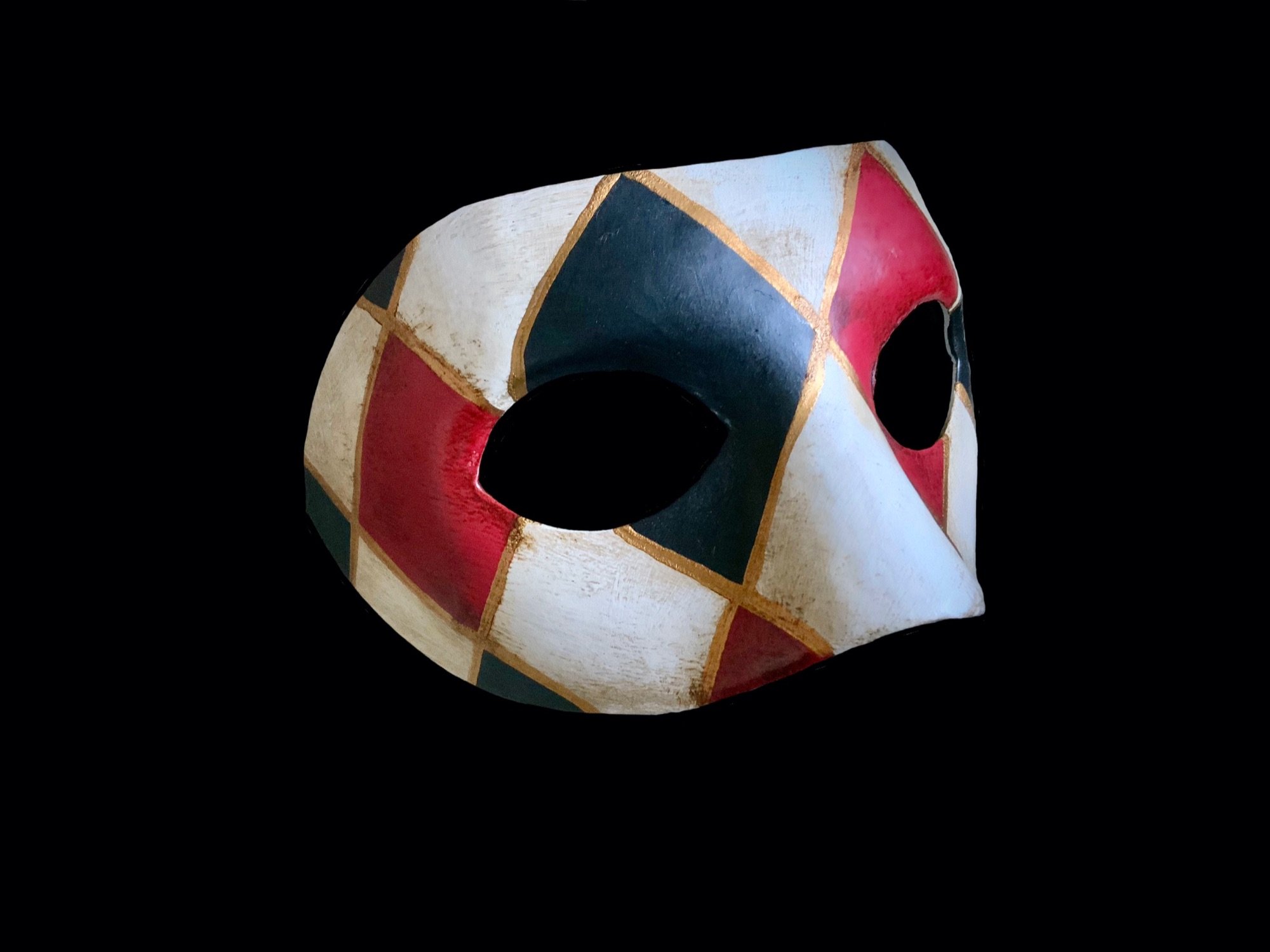
COLOMBINA
🎭 Covers: Eyes and upper face
🎭 Key features: Lightweight design with decorative details such as feathers, crystals and metallic finishes
Named after the character Colombina from Commedia dell'Arte, this mask takes its name from a clever and independent maidservant who was often portrayed as one of the most intelligent characters in the performance. Her wit, charm and ability to outsmart others made her one of the most popular figures in traditional Italian theatre. Unlike many of the other characters, Colombina often relied on intelligence rather than status or strength to achieve her goals.
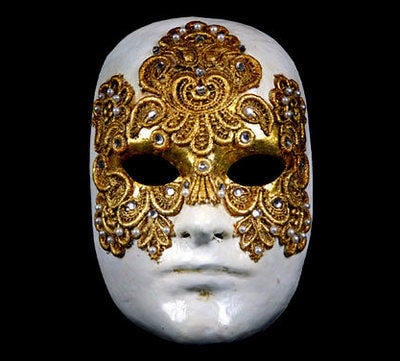
VOLTO (Larva) Mask
🎭 Covers: Entire face
🎭 Key features: Plain white design with a distinctive facial shape
The Volto, also known as the Larva, was one of the most widely worn masks during the Venetian Carnival. Its simple white appearance concealed the wearer's identity while allowing them to move freely through Venetian society without being recognised. Often worn with a black cloak and tricorn hat, the Volto became a symbol of anonymity and social freedom, allowing people from different classes to mix without revealing their status or identity.
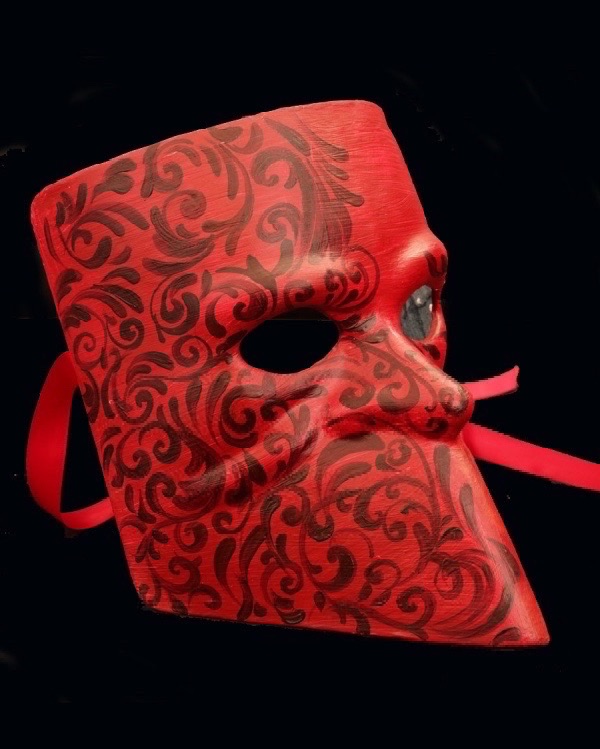
Bauta Mask
🎭 Covers: Most of the face
🎭 Key features: Distinctive angular shape designed to conceal identity
The Bauta is perhaps the most iconic of all traditional Venetian masks and played an important role in everyday Venetian life. Unlike many masks that were reserved for Carnival celebrations, the Bauta was worn throughout the year by those wishing to conceal their identity during meetings, social gatherings and even political events. Its distinctive shape allowed the wearer to speak, eat and drink without removing the mask, making it one of the most practical and influential masks in Venetian history.
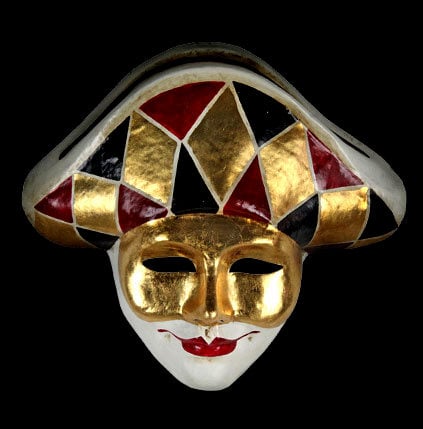
ARLECCHINO (HARLEQUIN)
🎭 Covers: Usually full face
🎭 Key features: Colourful diamond pattern inspired by the traditional Harlequin costume
Arlecchino, better known in English as Harlequin, is one of the most famous characters in Commedia dell'Arte. Instantly recognisable by his colourful diamond-pattern costume, he was traditionally portrayed as a quick-witted servant whose cleverness often exceeded his common sense. His playful personality, comic antics and enduring romance with Colombina helped make him one of the most popular and recognisable figures in Italian theatre.
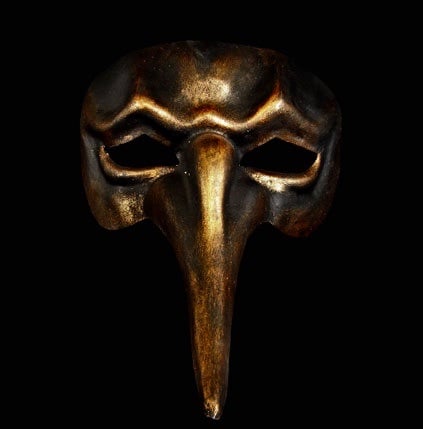
SCARAMUCCIA OR SCARAMOUCHE
🎭 Covers: Eyes and upper face
🎭 Key features: Black design with a long, pointed nose
Scaramuccia, known in English as Scaramouche, was a colourful character from Commedia dell'Arte famous for his exaggerated confidence and frequent claims of bravery. Despite presenting himself as a skilled swordsman and adventurer, he often revealed a far more cautious and cowardly nature when faced with real danger. His boastful personality and comic misfortunes made him a popular source of entertainment in traditional Italian theatre and helped secure his place among the best-known theatrical mask characters.
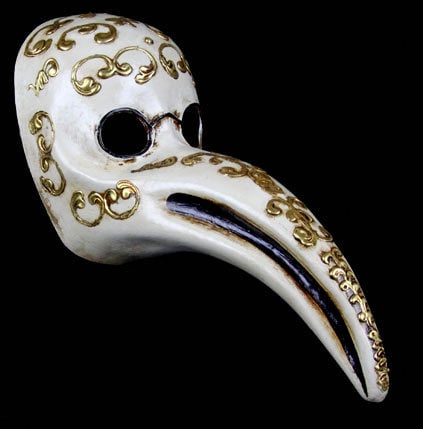
DOTTORE PESTE OR PLAGUE DOCTOR
🎭 Covers: Full face
🎭 Key features: Long curved beak inspired by historical plague doctor masks
The Plague Doctor mask traces its origins to the physicians who treated victims during Europe's devastating plague outbreaks. Its distinctive beak was traditionally filled with herbs, flowers and aromatic substances, which were believed to protect the wearer from infection. Over time, this unusual medical mask became associated with Venetian Carnival and evolved into one of the most famous and instantly recognisable Venetian mask styles in the world.
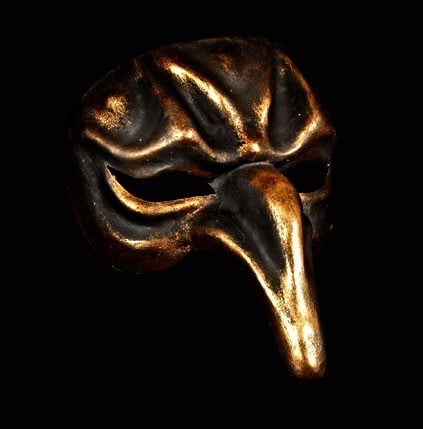
PULCINELLA
🎭 Covers: Eyes, nose and upper face
🎭 Key features: Distinctive hooked nose and expressive character styling
Pulcinella is one of the oldest and most influential characters in Commedia dell'Arte. Instantly recognisable by his hooked nose and distinctive appearance, he began life as a comic servant but evolved into a far more complex character known for his wit, cunning and ability to outsmart those around him. Many historians believe Pulcinella later inspired the famous Punch character from the English Punch and Judy shows, helping to spread his influence far beyond Italy.
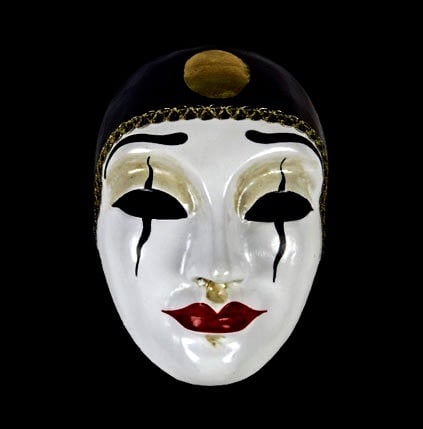
PIERROT
🎭 Covers: Full face
🎭 Key features: Inspired by the classic white-faced clown character
Pierrot is one of the most famous and enduring characters in European theatre. Originally associated with Commedia dell'Arte before becoming a popular figure in French pantomime, he is traditionally portrayed as a gentle and trusting clown who often finds himself the victim of jokes and misunderstandings. His distinctive appearance and sympathetic character helped make Pierrot one of the most recognisable theatrical figures in the world.
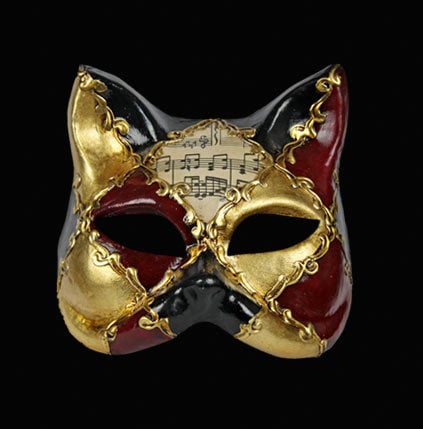
GATTO OR CAT
🎭 Covers: Eyes and upper face - Sometimes full face
🎭 Key features: Cat-shaped design with pointed ears and feline features
The Gatto, meaning "cat" in Italian, is one of the most distinctive Venetian mask styles. Its origins are linked to the unusual scarcity of cats in Venice during the days of the Republic, where they were highly valued for helping control the city's rat population. Over time, the cat became a symbol of good fortune and practicality, inspiring a mask style that remains a popular and instantly recognisable part of Venetian Carnival tradition.
Brief History Of Venetian Masks
Authentic Venetian masks have been handcrafted in Venice for centuries by skilled mask makers known as mascherari. Traditionally made using papier-mâché, these masks became an important part of Venetian culture, combining artistry, symbolism and disguise.
The origins of Venice's famous Carnival can be traced back to the 11th Century, although the wearing of masks became firmly established by 1436 when the mascherari were officially recognised with their own guild. Over time, masks evolved from simple disguises into elaborate works of art worn during celebrations, social gatherings and public events.
By the 18th Century, mask wearing had become a defining feature of Venetian life. Behind a mask, people from different social classes could mingle freely without revealing their identity, creating a unique sense of anonymity rarely found elsewhere in Europe.
The tradition declined after the fall of the Venetian Republic in 1797, but interest in Venetian masks was revived during the late 20th Century. Today, handcrafted Venetian masks remain one of the most enduring symbols of Venice, admired around the world for their history, craftsmanship and beauty.
Venetian masks generally fall into two main categories. Traditional mask styles such as the Bauta, Volto, Colombina and Plague Doctor have roots in Venetian history and Carnival culture, while character masks such as Harlequin, Pierrot and Pulcinella originate from the theatrical world of Commedia dell'Arte. Alongside these classic designs, modern artisans continue to create imaginative fantasy masks inspired by centuries of Venetian tradition.
How Are Venetian Masks Made?
Venetian masks have been handcrafted in Venice for centuries using a variety of traditional and modern techniques. While the original mask makers, known as mascherari, relied primarily on papier-mâché, today's artisans use a range of materials depending on the style and purpose of the mask.
Traditional papier-mâché remains highly valued because it is lightweight, comfortable to wear and allows for intricate hand-finishing. Although labour-intensive to produce, many collectors and enthusiasts consider it the most authentic method of Venetian mask making.
Modern Venetian masks may also be created using materials such as plaster-based compounds, leather, metal filigree and ceramic. Filigree masks, in particular, have become popular for their lightweight construction and decorative appearance, while ceramic masks are often produced as display pieces rather than wearable designs.
Some of the masks in our Designer Venetian Masks collection are created using hand-laid paper strips, a time-consuming technique that produces distinctive and often highly collectible pieces.
The Meaning Behind Venetian Mask Colours
The colours used in Venetian masks have long been associated with different meanings and symbolism. While interpretations can vary, certain colours have traditionally been linked to qualities such as mystery, confidence, elegance, romance and status.
Black – Mystery, elegance and power
Gold – Luxury wealth and success
Silver – Glamour, innovation and modern style
Red – Passion, confidence and energy
White – Purity, simplicity and truth
Blue – Calmness, trust and loyalty
Purple – Royalty, creativity and mystery
Pink – Romance, charm and playfulness
Green – Growth, luck and vitality
Ultimately, the best mask colour is the one that suits your outfit, occasion and personal style.
Venetian Masks and Masquerade Tradition
While Venetian masks originated during the Venetian Carnival, their influence spread far beyond Venice and helped inspire the modern masquerade tradition. Today, they remain among the most recognisable symbols of Venetian culture, admired for their artistry, craftsmanship and rich history.
What do masquerade masks symbolise? Masquerade masks traditionally symbolise anonymity, mystery and freedom - the chance to conceal your everyday identity and become someone different for a while. That sense of transformation remains part of their appeal today and helps explain why masks are still at the heart of modern masquerade balls.
Discover Authentic Venetian Masks Handcrafted In Italy